Paragliding in Arunachal Pradesh
Before we start drooling at the prospect of flying with the birds let’s execute step 0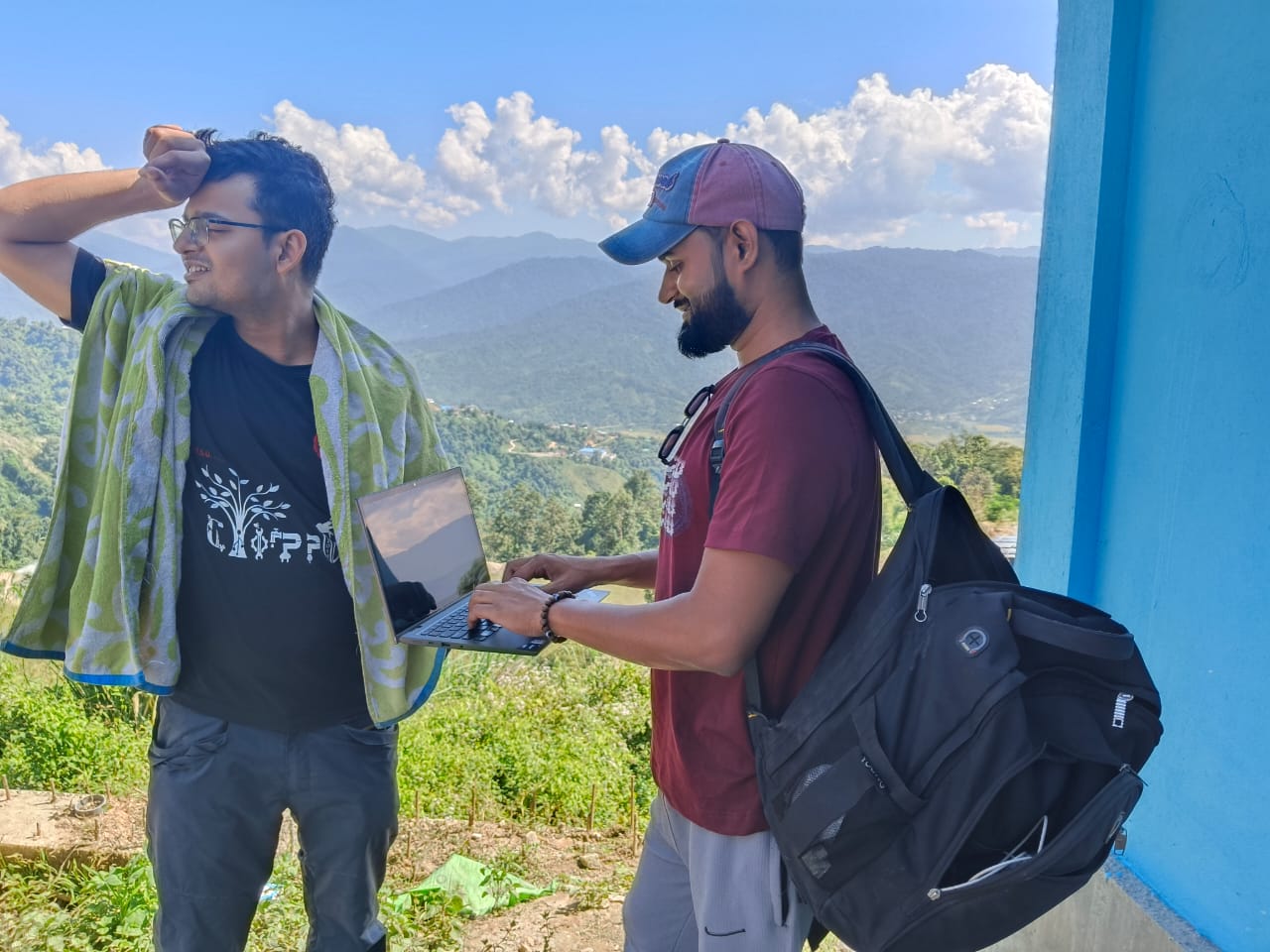
Step 0: Apply sick leave for 18 days. Preferably after reaching the training ground.
As a curious cat I am entitled to 9 lives. I nearly lost one on the snow slope training so I still have 8 more to go. A few weeks post my mountaineering course I decided I’d give aerosports a try and boy that took me to cloud 9. I am going to skip the details where we clean grass and pick up cow dung at the landing zone.
NIMAS. National Institute of Mountaineering and Adventure Sports conducted its 10th Combined Paragliding Course in mid October. There are three phases to this:
P1: Ground Handling. Where you learn to judge where your glider canopy wants to take you and how you dictate the path and not the other way round.
This is the hard part. I promise things are smooth sailing after this. You can’t take off or land if you can’t run with your glider. Only 1 in 6 accidents happen in air while paragliding so it’s best to be armed for the remaining 5. Our goal is to lift the canopy from the ground in a headwind, ensure that it doesn’t get ahead of us by damping (slight break) and sprinting ahead. Its always fun to mushroom your glider when you head back.
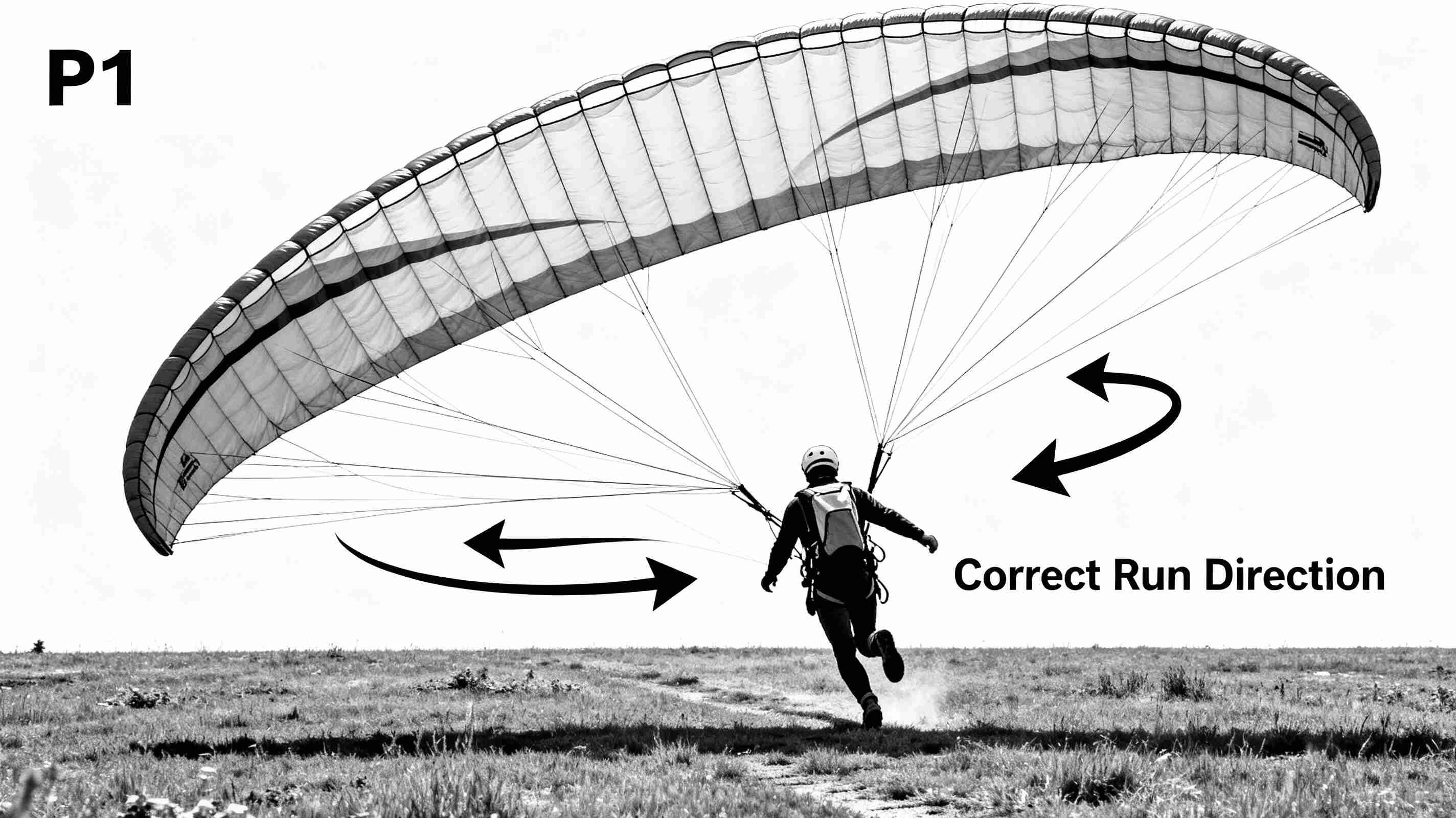
If you’ve studied physics in class 9 it won’t be much trouble figuring out how a glider works. A canopy has open cells which get filled with air when you kite it in the wind. This creates the necessary pull that gets you airborne. Naturally when the canopy tilts left you get pulled to the left. Our job is to immediately correct the trajectory by shifting to the left as we try applying the right brake gently to try and get the glider horizontal again.
P2: Bunny Hops. Where you learn to get over the fear of jumping off a cliff.
Gear up and learn to pack a glider cuz mushrooms are for noobs now. We need to pack mylar to mylar neatly and head for a quarter hour long trek back to take off site. We are getting ahead of ourselves. Let’s go back to the launch site for now.
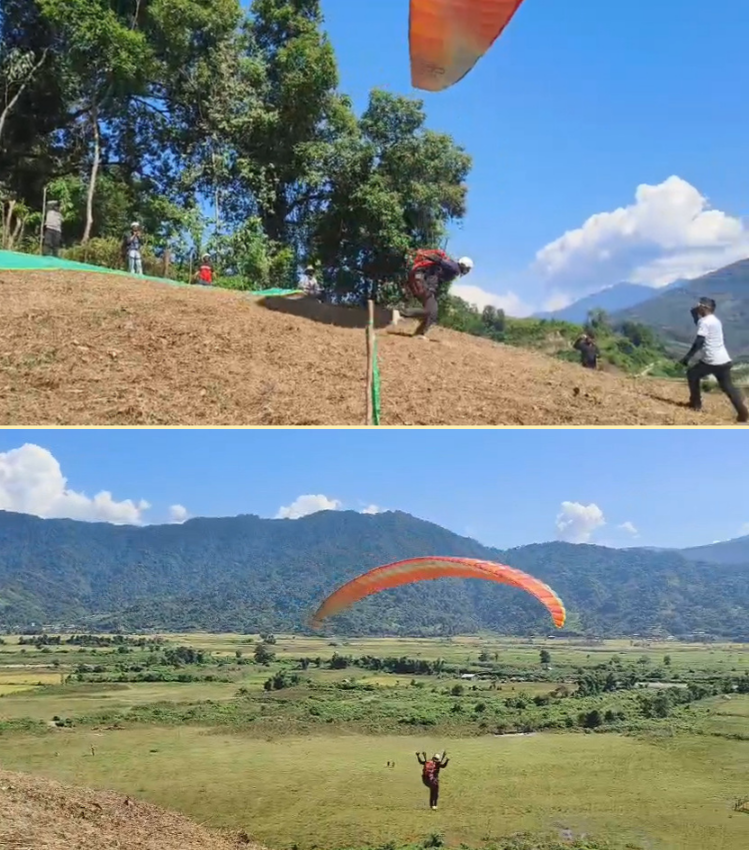
A P2 pilot is expected to judge when the headwind is right for him to raise his canopy and NOT rest on the seat harness. As enticing as it may be, we need to remember that a bunny hop flight barely lasts half a minute and you should be in a position to land your two feet. Or risk a spine injury. It’s worse than dying.
There is a lot that happens before and after a flight. When you’re not flying you’re helping other pilots gear up. Clearing any knots on their riser. Being a cameraman. Staying alert at the stop line to stop a failed take off. God forbid if you’ve managed to screw the takeoff in the first few seconds it’s better to abort it all together than to find yourself hung on some random tree. Yes we’re expected to still communicate on our radio set “Pilot Yash safely landed” in that event as well. As long as we don’t need a stretcher you can assume we’re safe for the most part.
We have progressed very quickly from mammals to birds. As a matter of fact birds are who we should be looking out for if we want to catch thermals and ascend upwards instead of just flying to land. A windsock at the landing area helps us judge the direction of wind which is crucial for safe landing. As the glider approaches the ground we have the ability to control the speed using control lines. Yes, the same “brake” lines with which we were controlling direction on ground in P1. You’re allowed to take upto half the brake while approaching the ground and when we judge landing to be around 4 feet beneath us, we go for full flare. Go ahead and put your entire weight on it if you will. Hopefully we get a feather landing and a few seconds to sprint towards our landing marshall who had been with us the entire time on radio. Good job sir. I can still walk after flying. Unbelievable.
P3: Flying with the birds
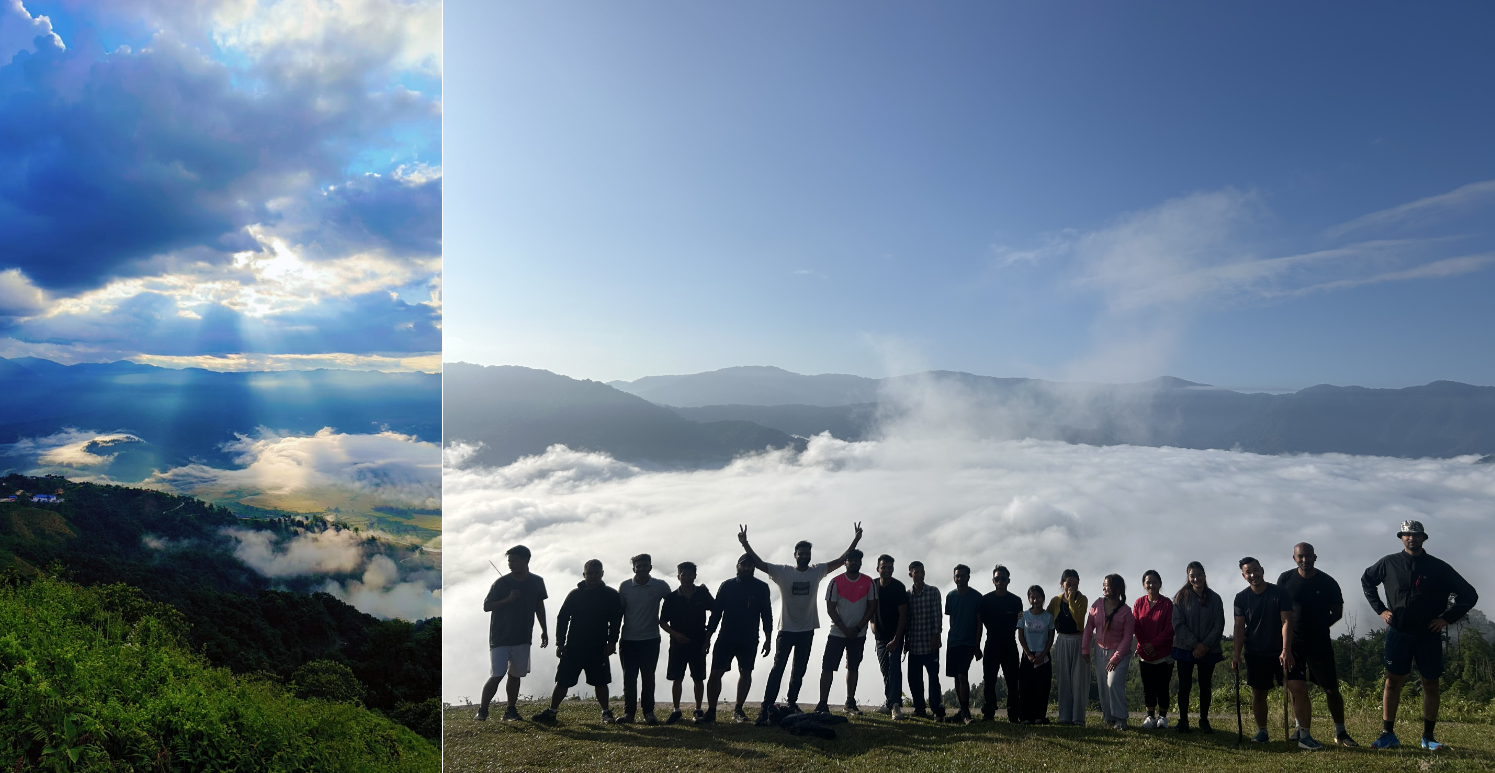 This is where your social media profiles get the most likes. Or dating apps if you're me. I don't use social media. Want my Bumble link tho?
Anyways, we digress. It has all been fun and games so far and we’ve all been waiting for an opportunity to make the skin tan worth it. Pro tip: carry a bandana to deal with sweaty forehead if you wear specks. You don’t want your vision compromised mid air. Before judging by the picture I’d like to reassure you - my loyal subscriber - we fly with a reserve parachute and it’s on the lower right end of the seat harness. In case there is an emergency and we have sufficient altitude we will drop without a broken limb. The usual risks of this event entails landing on live electric wires but we can ignore that for the course. Have faith in physics and your gliders will respond to your inputs the way you intend for it to.
Take a deep breath in. We’re going to be pilots now. Should we consider a ridge soaring over Everest? Afterall those climbers can only get to 8,848.86m above sea level. The take off marshal has cross checked our gear and we’re ready to take a leap of faith. We’re done with all pre-flight checks and reported our status over radio. What can possibly stop this awakening of the beast from within?
The wind direction. Anti-climatic, right? We wait there for 20 minutes for the wind to change direction. It doesn’t care. Indian fighter jets are conducting their routine patrol thousands of feet above us ensuring our territorial integrity like the true guardian of the skies that they are. We should totally consider paramotoring next and not depend on wind as much.
And then finally we get a headwind. Palms are sweaty, knees weak, arms are heavy. Everyone jolts into action. Cameraman has you on his lens to project any possible mistake in the class later to have a good laugh. Few guys lift your canopy a little. The locals are just as enthusiastic about us raising the wings to take off. They sometimes come near us and pose with the pilot-to-be. Such nice people.
We pull the glider like we did in P1. We sprint ahead and shift weight like we did in P2. P3 demands that we stay calm and enjoy the fruits of our labour. We let go of the controls to adjust ourselves in the seat harness for a few seconds. Felt terrifying at first. That’s alright. Fear is an instinct; courage is a response. We hear the people cheering behind us. Their voices fade away and the take off marshal’s composed judgement about the wind takes over. He instructs us to head towards a nearby water reservoir. Thoughts about crashing in the lake and drowning with the glider run like a slideshow as we fly closer. We reassure ourselves with our skill in unbuckling the seat harness in the event of a water-splash-crash. Becoming fish feed would be a cool cause on death certificate nonetheless.
We take a deep sign of relief as we clear our way away from the lake. The worst has been averted. Now all that’s left is to approach the landing zone like we did in P2. We shift our hip outwards as taught in the preceding class and are ready to approach the land. Windsock suggests we are in a headwind. We check the speed with 20% of brakes engaged and right before 4 feet we perform a full flare. The glider nearly halts to a zero as we decide to take the baby for a run and happily run towards the landing marshall. Although he is only a few feet away from where we mushroom to clear the area for the next pilot, we still are obliged to report our status. “Pilot Yash safely landed.”
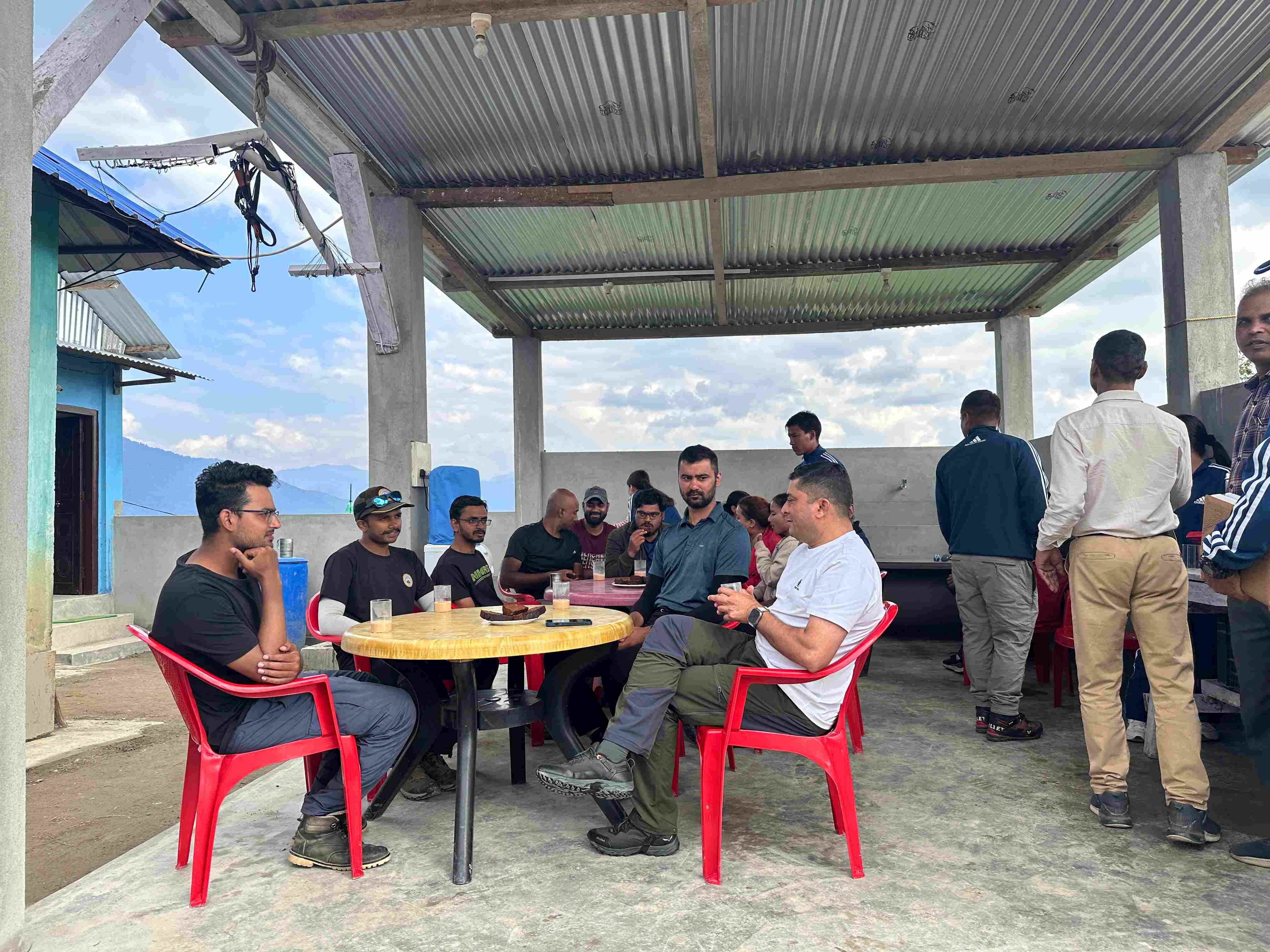
While learning to fly by ourselves was a worthy cause, the friends that we made along the way was what made the course an adventure. Right from the people who taught us to fly, the brothers who helped us pack our glider and sometimes came to our rescue when we tripped or just steered the wrong way in a moment of fear: everyone leaves their mark and helps you grow as a person. We came here as individuals and we go back relying on other people’s idea of transportation and stays. This was a journey in the Indian Himalayas.
See you soon reader. Until next time. May the Gods watch over you.
Skiing in Himachal Pradesh
Give thy precious some time to type things out.
Using RTI the right way
“Beneath the rule of men entirely great,
The pen is mightier than the sword. Behold
The arch-enchanter’s wand! — itself is nothing! —
But taking sorcery from the master-hand
To charm the skeletons out of the city-shrine…”
~ Edward Bulwer-Lytton
Thy precious was jaywalking through the brightly lit alleys of internet. More specifically, the philately section of India Post. If there is one department that has penetrated India after Indian Railways then it has got to be the Department of Posts. Even if you’re a shepard deep in the mountains of Himachal Pradesh, you will still receive your money order and letters from loved ones.
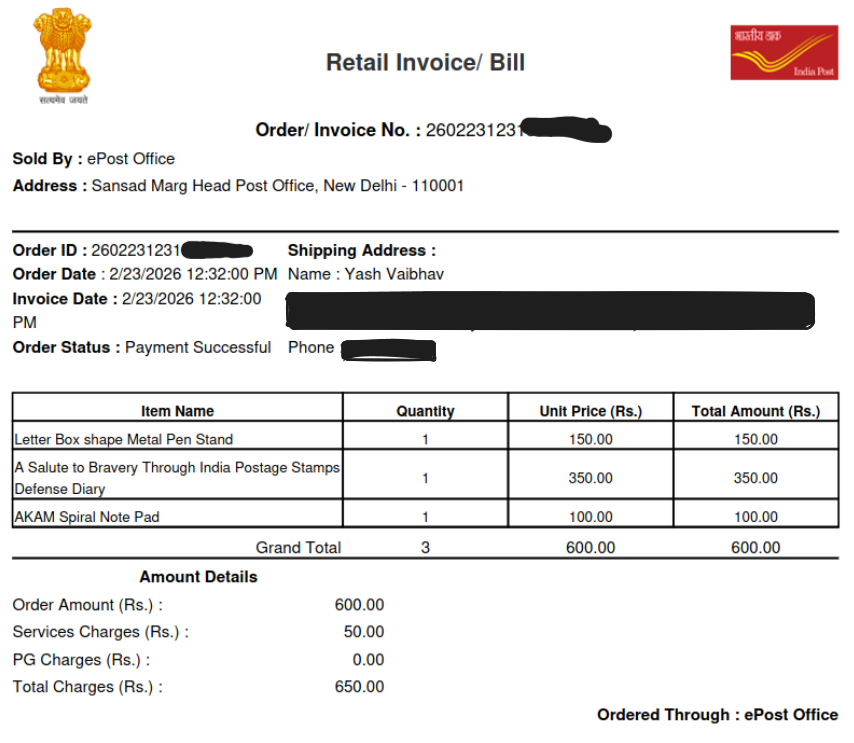
I recommend the pen stand that should actually be a piggy bank.
What is Right To Information anyway
The “babu” system of any bureocracy encourages a thick layer of seperation between the administration (them) and the administered (citizen, you). They look to exploit the gap in our understanding of the process. As long as we don’t know who exactly has the authority to act on our case and hasn’t, we will forever be under the mercy of those who will take some “sweets” to get the job done. Or not do it at all.
RTI is an instrument to stab this process right in the chest. Not only can we demand to know something but also impose a timeline of 30 days of responding to the application. The response can be challenged by one level senior officer to the appointed PIO. The revised response can again be taken up to Central/State Information Commission in you’re still unsatisfied.
Let’s see how we can make people in govt jobs who don’t care really care a lot.
Filing RTI online with UPI
If you’re an Indian reading this you’re already hooked after reading UPI. For an Indian citizen above poverty line, an RTI is going to cost ₹10. Department of Personnel and Training has enabled Indians to file RTI online with their portal.
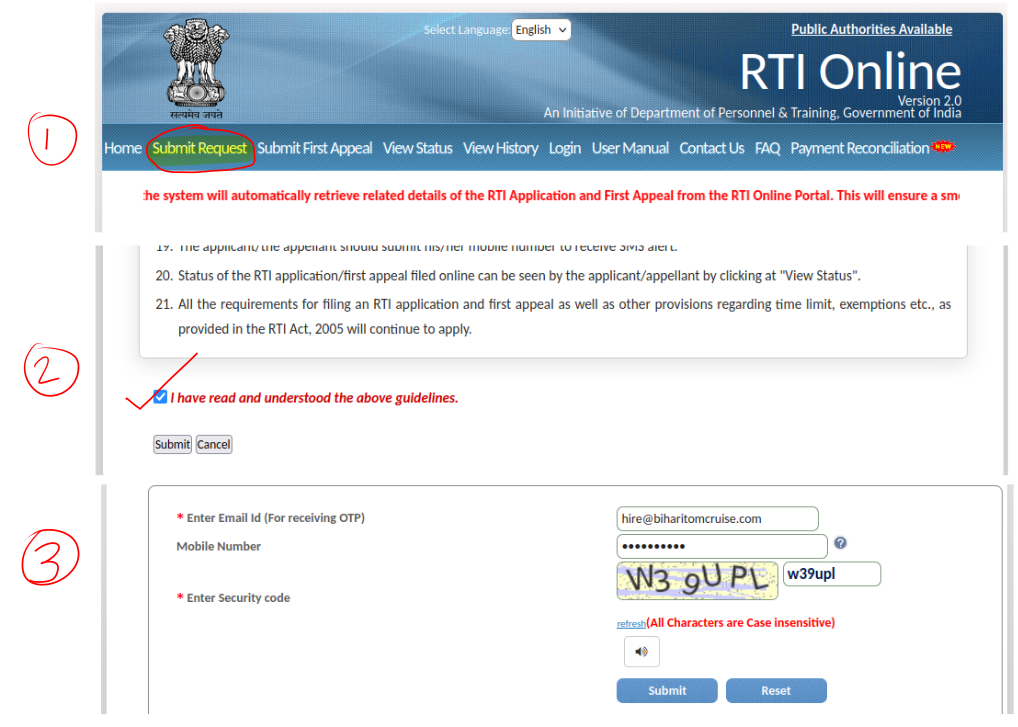
Head over to RTI online portal and complete steps 1, 2 and 3 as shown to begin with.
Disclaimer: The public authorities listed belong to the Central govt. For State Govt related authorities we will have to resort to offline method discussed below. Also, RTIs are for govt bodies exclusively. Don’t harass your corporate employer into revealing payslips of everyone in office just because you have ₹10 in pocket.
Shit gets real from here. Thy precious knows the govt department responsible for this is “Department of Posts”. Thy precious recommends you have a quick chat with AI and figure out which body to direct the RTI to. The PIO is responsible for transferring it to the right department under section 6(3) of the RTI Act (2005), Republic of India.
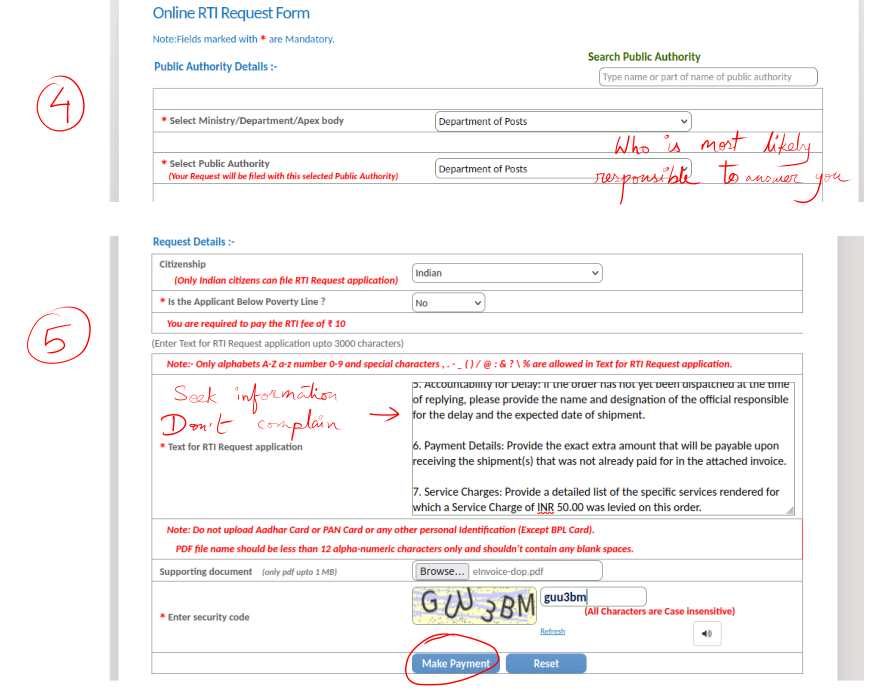
For the love of god, please don’t treat the textbox as your chance to publish the next gatekeep-gaslight-girlboss lore you have. Our strategy is going to be very precise: make the department stick her neck out and name who is responsible for causing us agony on paper. The bureaucrats hate a paper trail. For the most part they will make sure the job is done before the RTI response is sent in statutory period of 30 days. That’s way better than answering question (3) and admitting the wrong doing. Notice the content of thy precious’s RTI:
1. Current Status: What is the current status of the order placed on February 23, 2026, with Order/Invoice No. 2602231231_____?

2. Daily Progress Report: Provide a Daily Progress Report (or Work History) of the action taken on this order from the date it was received by the department until the date of replying to this RTI.

3. Tracking Details: Provide the specific Tracking Number(s) assigned to the shipment for the aforementioned order.

4. Dispatch Information: Provide the exact date of departure/dispatch from the warehouse or origin post office.

5. Accountability for Delay: If the order has not yet been dispatched at the time of replying, please provide the name and designation of the official responsible for the delay and the expected date of shipment.

6. Payment Details: Provide the exact extra amount that will be payable upon receiving the shipment(s) that was not already paid for in the attached invoice.

7. Service Charges: Provide a detailed list of the specific services rendered for which a Service Charge of INR 50.00 was levied on this order.
Make the life of PIO’s officer easier and leave little room for those slacking to escape, it’s mandatory for us to ask queries point wise so that the PIO doesn’t respond with “information not available” or much worse revolt with section 2(f) because you were a cry baby. By specifically asking about what should mostly be in govt records, the PIO is compelled to give an answer or face the scrutiny of FAA or CIC in future. Everyone fights to keep their neck intact.
Thy precious strongly recommends you give context to your favourite AI chatbot to make sure the information is made available. Open google docs and paste and review what the AI spat out.
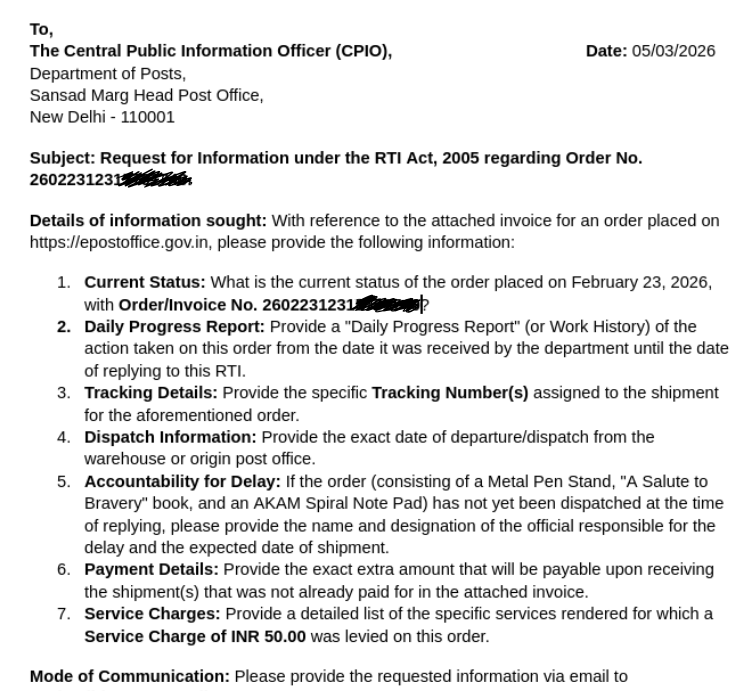
All necessary documents can be appended to the same pdf letter and uploaded in step 5. Write “As given in document” in the textbox to save yourself some sanity. You’d know what thy precious is talking about once you see that links are not allowed in the textbox.
Filing RTI via speed post
There are only minor changes in the process of sending an RTI via speed post. Yes, it’s about the payment. You can use a cheque or demand draft (crazy expensive) directed to the Accounts Officer of the said department. Thy precious recommends you getting your hands on ₹10 Indian Postal Orders. A DD will cost you a lot of money. A single IPO costs ₹11 and is available at your nearby Post Office. Keep a few just cuz how nostalgic and cool they are. Can you believe that people in 90s and much before that used to pay for exam application fees using this?
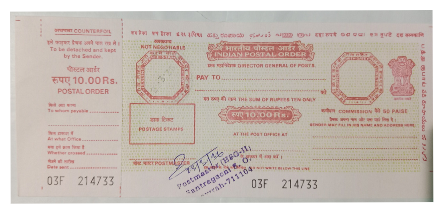
In addition to the particulars of the letter, please do add your signature and detail of application fee.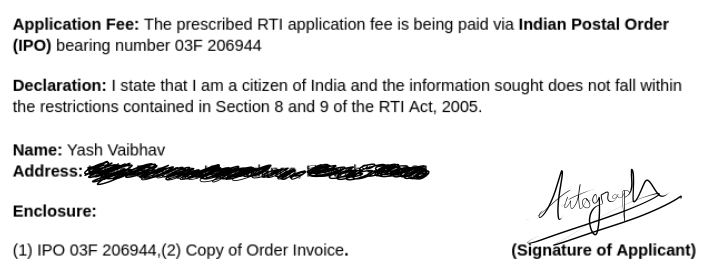
Tear off the counterfoil (left end) of IPO as proof of payment in case it’s ever disputed. Pay to the Accounts Officer, target department. Pay at the PO of given city/district where you’re sending the letter. Send the letter to the PIO via speed post. As of March 2026 it’ll cost you ₹55 on top of the stationary and IPO cost. Yes it’s somewhat expensive but very serious. Signalling the mode of communication as email ensured you aren’t given a bill for xerox of offline documents by the PIO.
Tracking the RTI online
If you were lucky enough to have your rti registered via the portal, thy precious recommends you check the registered email for “registration number” of the RTI. Goto view status page as shown in step 1 and fill in the details to check the status of RTI. If you didn’t receive an email with registration number but are confident that the payment went through then please goto view history page. You shall find all RTIs and first appeals made via said email id on the portal. RTI is not a favour. Its your right as an Indian.
The conclusion
Oh right, you want to know about thy precious’s pen stand and how did the RTI end up. As of March 2026 the RTI had been transferred to two CPIOs, one in Howrah and another in New Delhi.
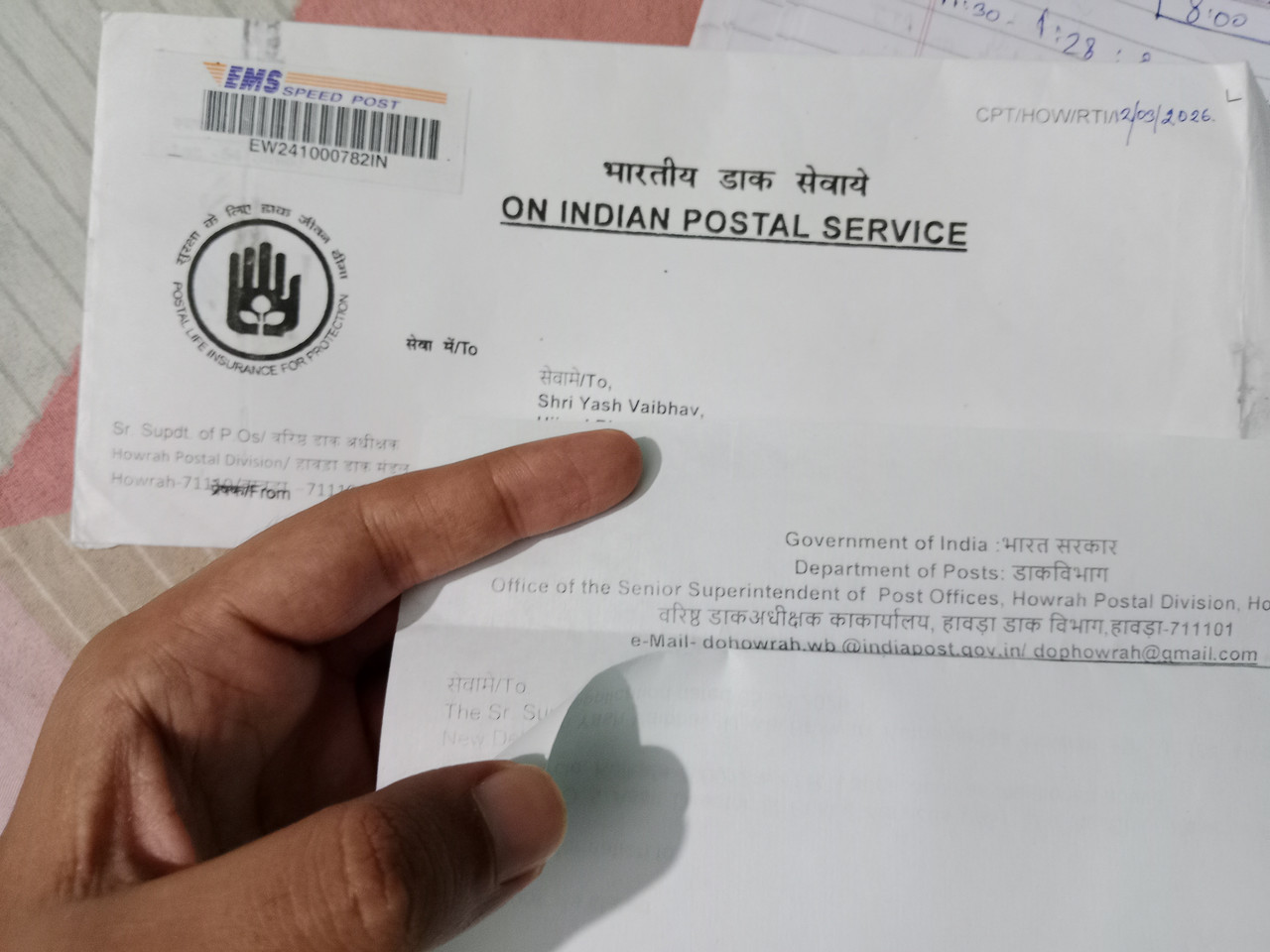
Nice RTI hobbits!…Hobbits always so polite, yes! Shri Bihari Tom Cruise forever.
CPIO at Howrah was quick to point out the information resides with New Delhi. Thy precious received his consignment on the same day as first RTI response. Have a look at
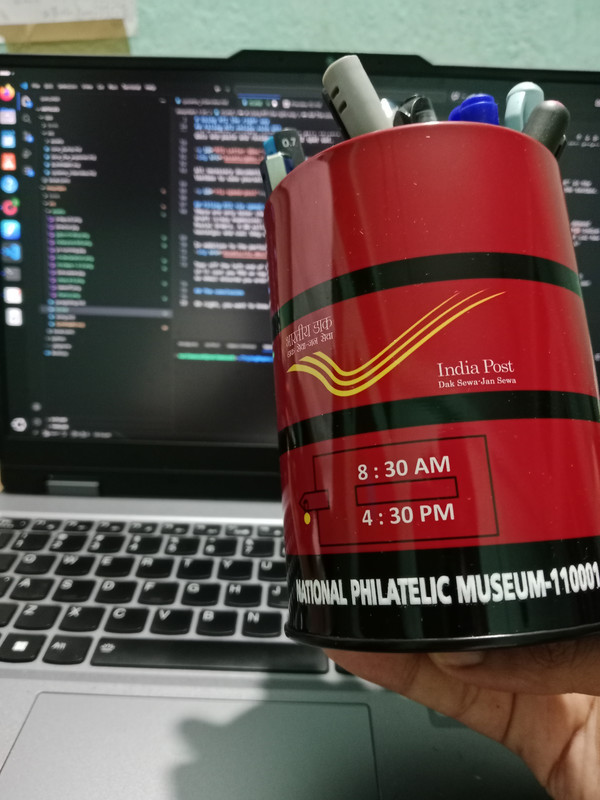
precious Pen Stand
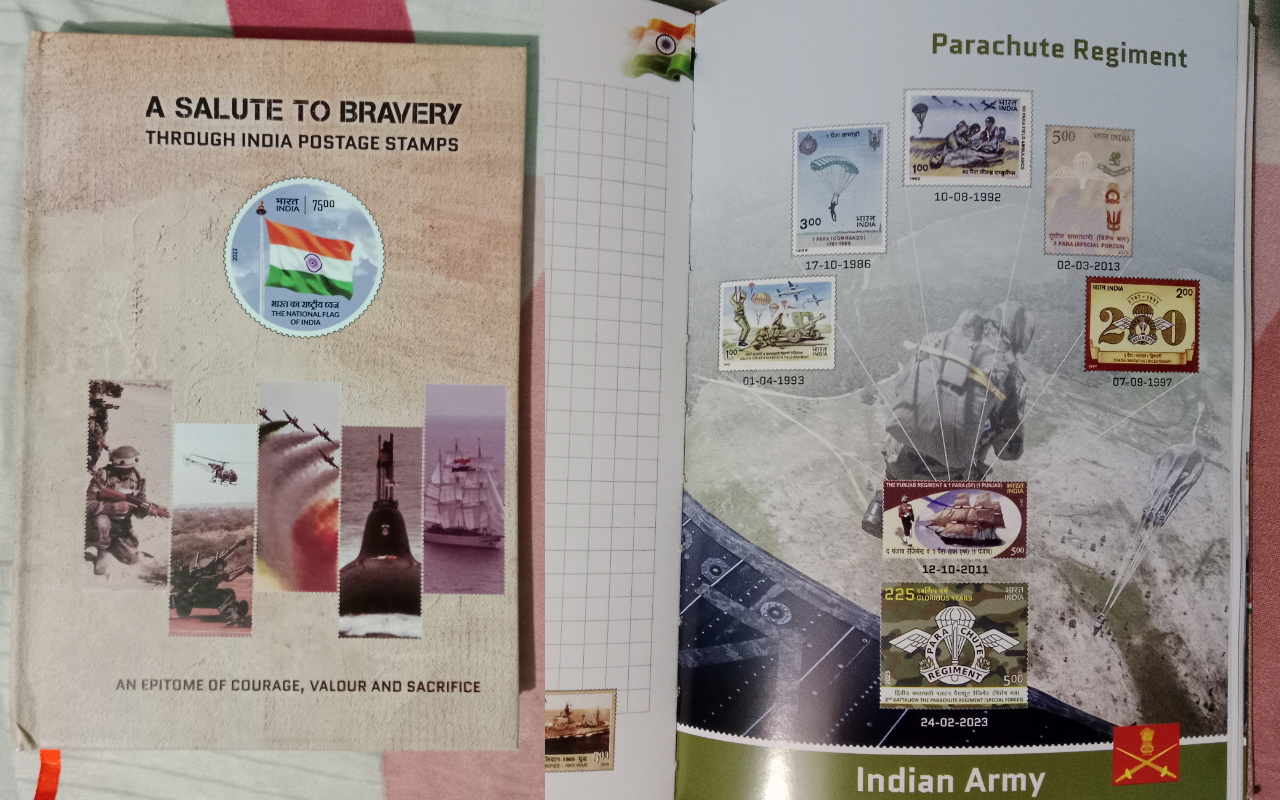
We Be Nice to Them If They Be Nice to Us ~ Indian Armed Forces
Until next time loyal reader. May the Gods watch over you.